
Free Guide · 4 Pages · Brain Fog in Perimenopause

The exact moment
You’re mid-sentence, in a meeting that matters, and the word you need is just gone. Or you’ve walked into a room and can’t remember why. In the half-second before you recover, a thought lands that’s bigger than the moment deserves — is something actually wrong with me.
That thought is the real subject of this guide, not a side note.


Does this sound familiar?
Check anything that’s true for you. There’s no score and nothing to submit — just a page ahead that already has a name for it.
What the research actually says
Brain fog isn’t a diagnosis — it’s the plain-language term for real, common trouble with focus, word-finding, and short-term memory. The Menopause Society describes cognitive symptoms like this as commonly reported during the transition, tied in part to estrogen receptors in brain regions involved in memory, including the hippocampus.
What Daniel Reed Says
Here’s the part most guides skip: current evidence doesn’t support typical perimenopausal brain fog as an early sign of dementia. It’s generally described as transient — it comes and goes — rather than progressive. That’s the current, honest position of cognitive research, not a reassurance invented to make you feel better. A 2026 review in Frontiers in Human Neuroscience puts it plainly: these changes are typically mild, variable, and distinct from dementia, and dementia itself remains uncommon in midlife.
The longer-term picture is still genuinely an open question, and this guide doesn’t pretend otherwise.
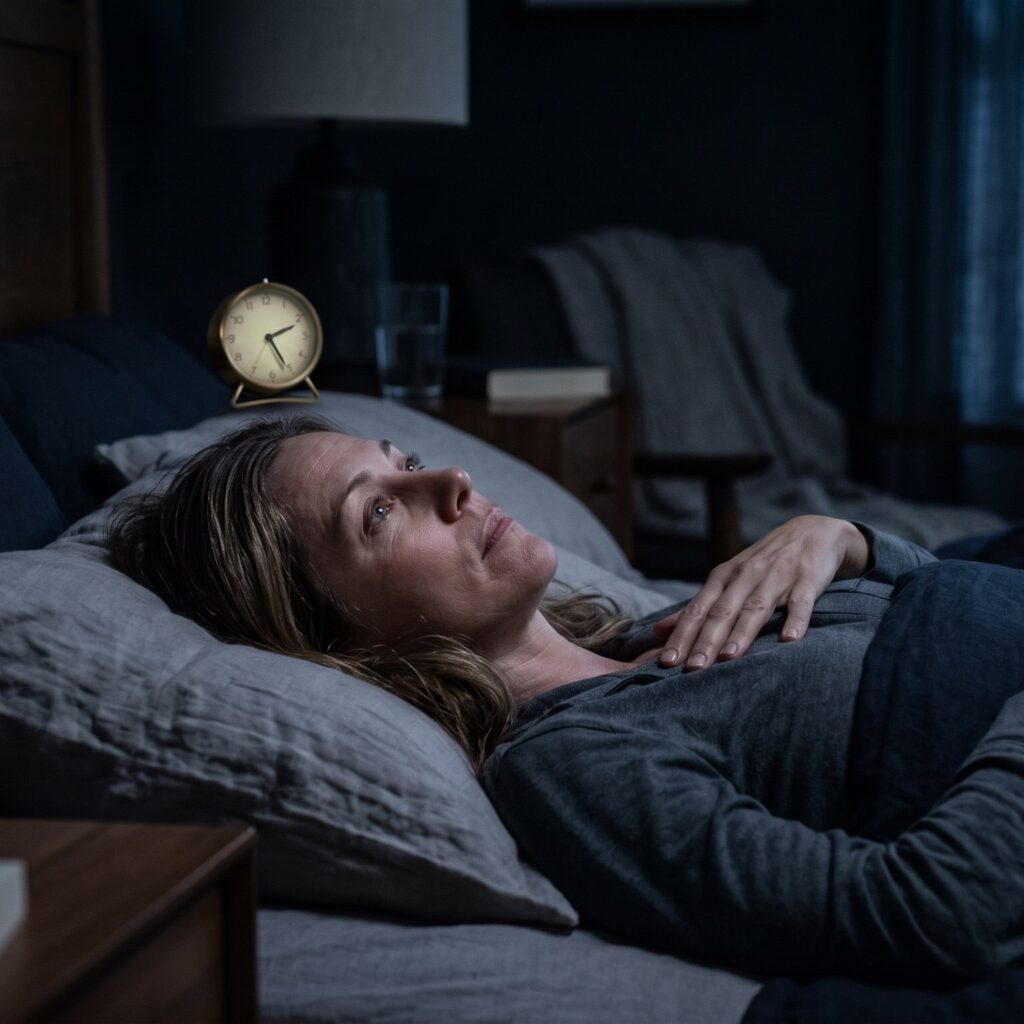
It’s rarely just one cause, either. Fluctuating hormones are commonly linked to these symptoms, but poor sleep — including the specific pattern of waking around 3 a.m. — and ongoing stress independently, measurably affect focus and memory the same way.

Daniel Reed
Science & Research Editor
States what’s established before drawing a conclusion.
What’s inside the free guide
- It has a name, and it’s not rare — the plain-language reframe, plus one thing to try in the moment a word disappears mid-meeting
- What’s actually known — and what isn’t — a boxed insert from Daniel Reed, Science & Research Editor, on the dementia question specifically
- It’s rarely just one thing — the sleep/stress/hormone connection, including the 3 a.m. link, with one lever to actually track
- Know when this is bigger than a guide — exactly when this stops being a guide’s job and starts being a provider’s
Who this is for
- You’re noticing more trouble with focus, word-finding, or short-term memory than you used to
- A part of you is quietly scared this means something more serious
- You want to know what’s actually established before you spiral


Get the free guide
Free — no card required
Delivers the PDF instantly and adds you to the HerBetterDays newsletter — one useful thing in your inbox, not a firehose.
Unsubscribe anytime, one click
Written by editors who read the research

Maya Patel
Mindset & Stress Editor
Names the feeling before the fix. Leads this guide’s voice throughout.

Daniel Reed
Science & Research Editor
States what’s established and what isn’t before drawing a conclusion. Writes the science insert.
Neither is a licensed medical professional — see the guide’s own disclaimer, and our full medical disclaimer.
Frequently asked questions
Is perimenopause brain fog a sign of early dementia?
Current evidence doesn’t support typical perimenopausal brain fog as an early sign of dementia. It’s generally described as transient rather than progressive. The longer-term picture is still an open research question — this guide doesn’t claim it’s fully settled.
What actually causes brain fog in perimenopause?
Fluctuating hormones are commonly linked to it, but it’s rarely acting alone — poor sleep and ongoing stress independently, measurably affect focus and memory the same way. Often more than one factor is stacking at once.
Does poor sleep really make it worse?
Sleep disruption — including the specific pattern of waking around 3 a.m. — is tied to the same sleep-cycle mechanics that affect focus and memory the next day. If that pattern sounds familiar, we also wrote The 3 AM Guide for exactly that hour.
What can I actually do about it right now, especially at work?
The free guide includes one original technique for the moment a word disappears mid-meeting. The fuller guide, Is It Just Me?, includes six bonuses, including a dedicated Words-at-Work page with three ready workplace phrases and a real workplace-impact statistic.
Is this guide really free?
Yes — no purchase required, just an email to send the PDF to.
Are Maya Patel and Daniel Reed licensed doctors?
No — neither is a licensed medical professional, and this guide doesn’t claim otherwise. They’re named editors who read the primary research and write from it, the same way a careful health journalist would. For anything that needs a diagnosis or a treatment decision, that conversation belongs with your own healthcare provider — see our full medical disclaimer.
When should I actually see a doctor about this?
If what you’re noticing is steadily worsening rather than coming and going, or it’s paired with other changes that concern you, that’s worth bringing to a healthcare provider directly. If the concern is specifically about what to say at that appointment when your labs already came back “normal,” Doctor Visit Prep Kit is built for exactly that conversation.
If you want the fuller picture (optional, not required to use this free guide)
“Is It Just Me?” ($19) — the sudden, out-of-character anger, the full science chapter, and doctor-visit language, plus six bonuses including the full Words-at-Work page
See the guide“The 3 AM Guide” ($7) — if the 3 a.m. pattern above sounds specifically like you
See the guide“Doctor Visit Prep Kit” ($17) — language for the appointment, if your labs already came back “normal”
See the kit
This content is for educational purposes only and is not a substitute for professional medical advice, diagnosis, or treatment. Always consult a qualified healthcare provider with questions about a medical condition.